Safe, accurate, and reliable chemical filling requires more than selecting a machine from a catalog. IFS designs and manufactures chemical filling equipment at our Venice, Florida facility—for applications ranging from household cleaners and detergents to caustics, solvents, and flammable liquids.
Years of engineering
Machinery designs
Countries installed
Part of The Middleby Corporation
No two chemical filling applications are exactly alike. Rather than forcing a product into a predetermined machine configuration, IFS engineers the equipment around the application. Over the years, we have created more than 700 different packaging machinery designs based on the products, containers, production requirements, and operating environments presented by our customers.
Our filling technologies include time gravity, overflow, servo pump, piston, peristaltic, net weight, and gross weight systems. That depth of application experience gives IFS a broad technical foundation from which to develop the right solution while maintaining proven equipment platforms, controls, and design principles.

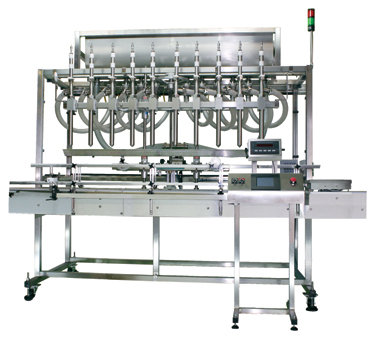
A practical, economical solution for many thin, free-flowing liquids where volumetric filling is appropriate.
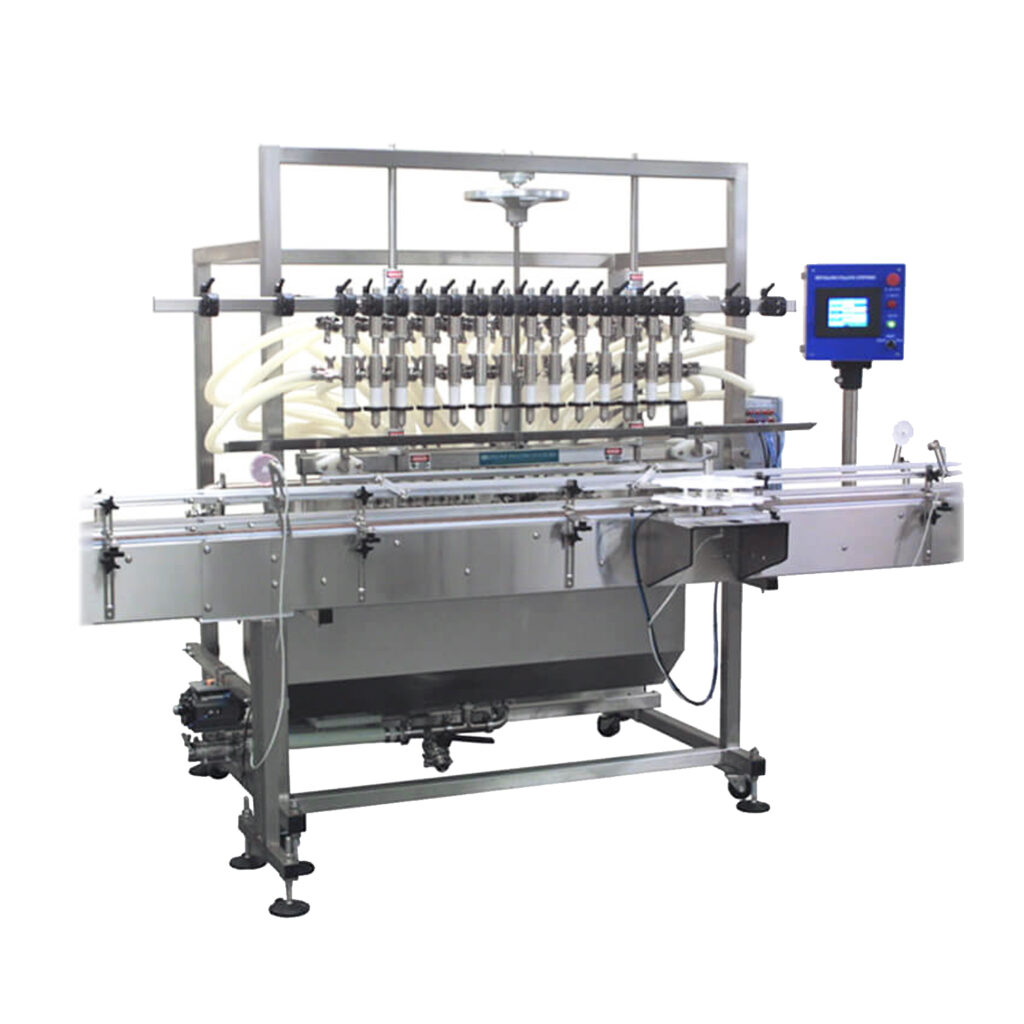
Well suited to many low- to medium-viscosity products where a consistent visual fill level is important, particularly in transparent containers.
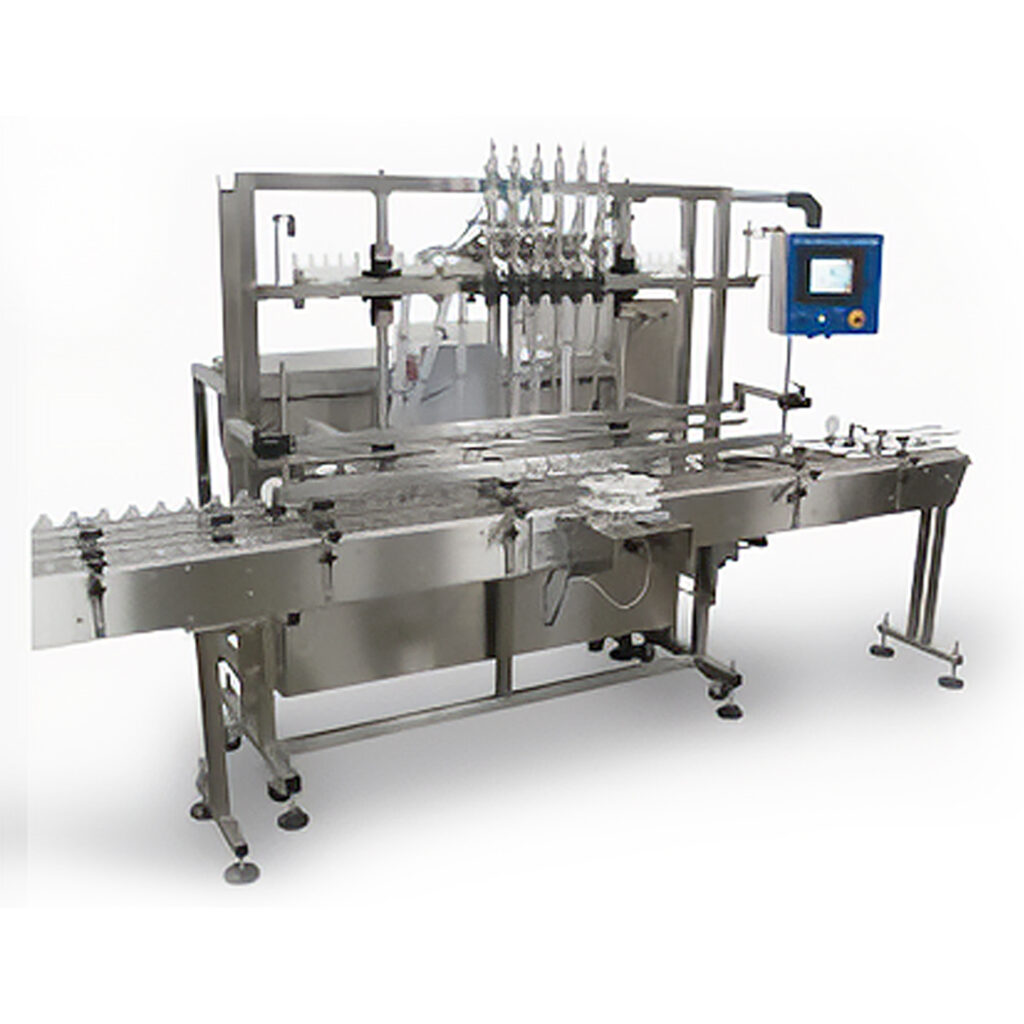
Positive-displacement technologies used for a wide range of products, including higher-viscosity chemicals, gels, pastes, concentrates, and products requiring controlled product delivery.

Useful for applications where isolating the product within the tubing is desirable, including certain aggressive products or applications where minimizing cross-contamination is important.

Appropriate for products sold by weight, larger fills, and applications where controlling product giveaway and fill accuracy is especially important.
The appropriate filling system is determined by the complete application—not by a single product characteristic. IFS evaluates the chemical, viscosity, foaming tendency, temperature, particulates, container geometry and material, closure, required fill accuracy, production rate, cleaning requirements, facility classification, and future production needs.
Thin free-flowing products may be candidates for gravity or overflow filling, while viscous products may be better suited to servo pump or piston technology. Foaming products may require subsurface or bottom-up filling. Corrosive or chemically aggressive products require careful selection of compatible product-contact materials.
Acids, bases, bleach, and aggressive cleaning products can attack conventional machinery. IFS configures filling equipment using materials selected for compatibility with the specific chemical—extending corrosion-resistant construction to capping, turntables, and conveying equipment.
Solvents, petroleum-based products, paints, and other flammable liquids can require equipment designed for the classified environment. IFS designs filling and capping systems for Class I, Division 1 requirements, with appropriately rated components, grounding and bonding, inert-gas purging, and remote operation as needed.
Bulk chemical filling differs from conventional bottle filling. IFS provides equipment for pails, drums, barrels, and totes—configured by container size, product characteristics, required accuracy, production method, and operating environment, with hazardous-location and corrosion-resistant options available.
Production requirements determine the appropriate level of automation. Semi-automatic systems are an effective solution for lower-volume production, specialty products, shorter runs, or growing operations. Fully automatic inline systems are designed for higher production rates and can incorporate automatic container indexing, filling, closure application, labeling, coding, and downstream handling.
Many chemical manufacturers need more than an individual filler—they need a complete system in which container handling, filling, capping or sealing, labeling, coding, and conveying operate together reliably. IFS engineers and manufactures integrated liquid packaging systems with a single source of responsibility for the equipment package.
There is no single filling technology that is best for every corrosive product. The correct solution depends on the chemical, concentration, viscosity, container, production rate, and required accuracy. Just as important, product-contact materials must be selected for compatibility with the chemical. IFS can configure gravity, pump, piston, peristaltic, weight-based, and other filling technologies with application-appropriate materials.
Yes. IFS designs filling and capping equipment for hazardous-location applications, including Class I, Division 1 environments when required by the project. The equipment configuration is developed around the product, facility classification, and customer requirements, with appropriately selected components and safety features.
Yes. IFS designs and manufactures integrated packaging systems that can include container handling, filling, capping, sealing, labeling, coding, and conveying. The individual machines are engineered to operate together as a complete system and are supported by the IFS team.
Inline Filling Systems has engineered liquid packaging equipment for more than 25 years, with 700+ application-driven designs installed in 50+ countries—all designed, fabricated, and supported from our Venice, Florida facility. Tell us about your chemical, container, target speed, and operating environment, and our specialists will help determine the right solution.


